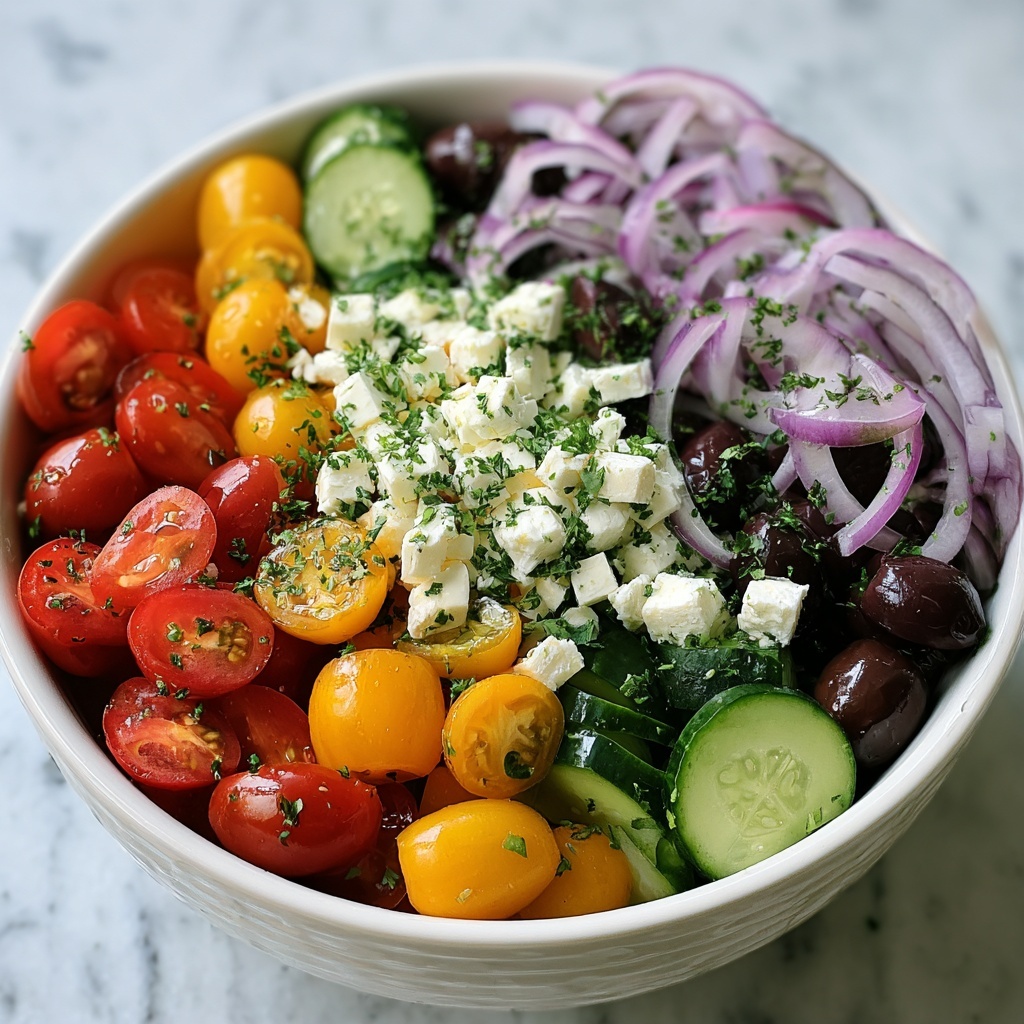
If you’re craving a fresh, vibrant, and utterly delicious salad that brings the sun-drenched Mediterranean right to your table, this Classic Greek Salad Recipe is exactly what you need. Bursting with crisp cucumbers, juicy cherry tomatoes, briny olives, and creamy feta cheese, every bite is a celebration of simple ingredients coming together harmoniously. This isn’t just any salad—it’s a perfect balance of flavors and textures that’s both refreshing and satisfying, making it a timeless favorite for any occasion.
Ingredients You’ll Need
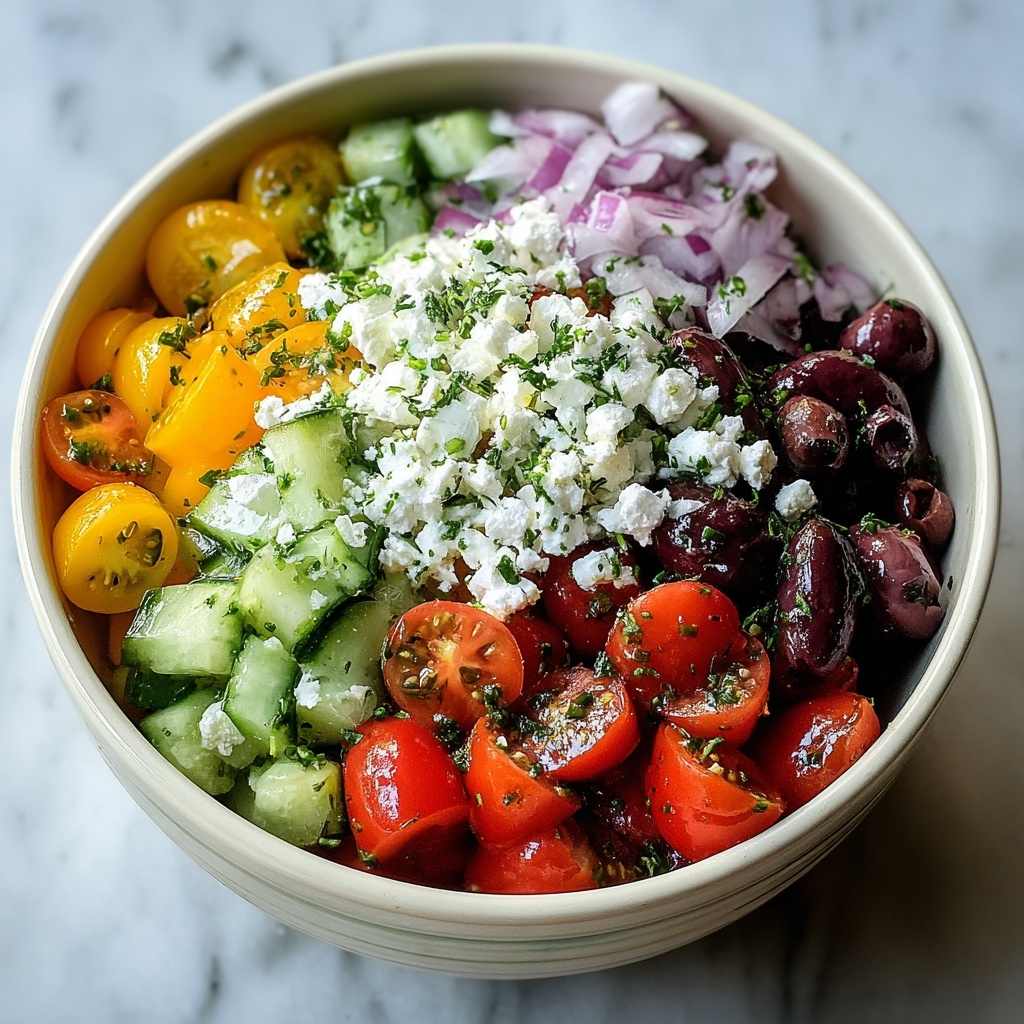
This salad shines because of its straightforward but carefully chosen ingredients. Each one plays a crucial role: from the crunch of the cucumber to the tangy punch of the olives and the creamy saltiness of feta, the harmony of colors and flavors is what makes this dish unforgettable.
- Cucumbers (2 cups, sliced): Adds a cool, crisp texture that refreshes the palate with every bite.
- Cherry tomatoes (1 cup, halved): Brings juicy sweetness and vibrant red color to the salad.
- Red onion (1/2, thinly sliced): Offers a zesty crunch and mild sharpness to cut through the richness.
- Kalamata olives (1/4 cup): Infuse an earthy, briny flavor that’s iconic in Greek cuisine.
- Green olives (1/4 cup): Adds a slightly different olive flavor, balancing the taste with a bit more sweetness.
- Feta cheese (1/2 cup, cubed): Delivers creamy, tangy, and salty notes that elevate the salad’s depth.
- Fresh parsley (1 tbsp, chopped): Provides a burst of fresh herbaceousness and bright green color.
- Dried oregano (1/4 tsp): Adds an aromatic, slightly bitter touch typical of traditional Greek dishes.
- Salt and pepper (to taste): Enhances the overall flavors and balances every ingredient.
- Olive oil (2 tbsp): A rich, fruity drizzle that brings everything together with silky smoothness.
- Red wine vinegar (1 tbsp): Offers a tangy acidity that wakes up the flavors beautifully.
How to Make Classic Greek Salad Recipe
Step 1: Prepare Your Vegetables
Start by slicing the cucumbers into neat, bite-sized pieces to keep every forkful crisp. Halve the cherry tomatoes, letting their juicy insides shine through, and thinly slice the red onion to add a gentle sharpness without overpowering the salad. Cube the feta cheese carefully to hold its shape while still blending smoothly with the other ingredients.
Step 2: Combine Ingredients
Gather all your prepared veggies and olives in a large mixing bowl. Adding Kalamata and green olives imparts the signature savory, briny notes that punch up the flavor profile. Toss these with the fresh, cubed feta so that each bite will be packed with that creamy, salty goodness.
Step 3: Season and Dress
Sprinkle the salad with dried oregano and chopped fresh parsley for that signature Mediterranean herbal aroma. Season generously with salt and freshly cracked black pepper to elevate the natural flavors. Finish by drizzling olive oil and red wine vinegar over the top, then gently toss everything together with care—too much stirring can crush the delicate feta and tomatoes, so a light hand is key.
How to Serve Classic Greek Salad Recipe
Garnishes
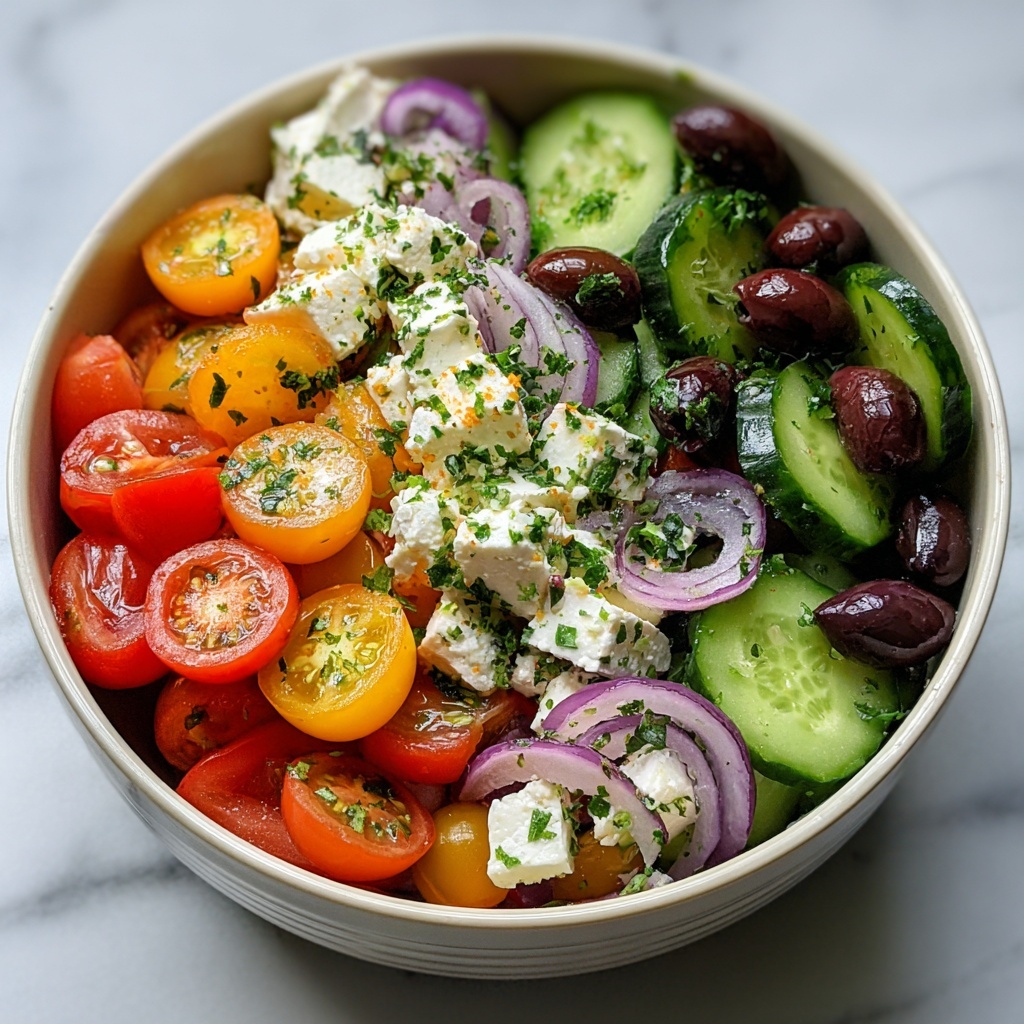
For an extra-special touch, sprinkle a few whole olives or a pinch more fresh parsley on top right before serving. You could also crumble a little extra feta for a visually appealing and flavor-packed finishing flourish. A light dusting of oregano on top enhances that unmistakable Greek vibe.
Side Dishes
This salad pairs wonderfully with lots of classic Greek staples. A warm, soft pita bread is perfect for scooping up every last bite. You might also serve it alongside grilled lamb, chicken souvlaki, or stuffed grape leaves to complete a vibrant Mediterranean meal. It’s also great as a refreshing side to heavier grilled dishes.
Creative Ways to Present
For a fun twist, serve your Classic Greek Salad Recipe in individual glass bowls or jars for a picnic or party. Layer ingredients so the colors pop, then toss just before eating. Another idea is to use large lettuce leaves as edible cups or arrange the salad on a platter artistically for a stunning centerpiece.
Make Ahead and Storage
Storing Leftovers
This salad is best enjoyed fresh to maintain its crisp textures and vibrant flavors, but you can store leftovers in an airtight container in the refrigerator for up to 2 days. Keep the dressing separate if possible to prevent the vegetables from getting soggy.
Freezing
Freezing this salad is not recommended, as the fresh cucumbers, tomatoes, and cheese do not fare well after thawing. The texture and flavor will be compromised, so it’s best to enjoy the Classic Greek Salad Recipe at its freshest.
Reheating
Since this salad is served cold and fresh, reheating is unnecessary. If you want to enjoy it later, simply give it a gentle toss to redistribute the dressing and refresh flavors before serving again.
FAQs
Can I use regular olives instead of Kalamata olives?
While Kalamata olives give a distinct and authentic briny flavor, you can substitute with other types if needed. Just pick ones that are flavorful and not too mild, as they add a vital punch to the salad.
Is it okay to use dried oregano instead of fresh?
Yes, dried oregano works beautifully in this recipe. It’s the classic seasoning for Greek salads and offers a warm, herbal note that fresh oregano might not provide as intensely.
Can I add other vegetables to the salad?
The beauty of the Classic Greek Salad Recipe is in its simplicity, but you can experiment by adding bell peppers or radishes for extra crunch and color. Just be mindful to keep the balance of flavors harmonious.
What type of vinegar is best for this salad?
Red wine vinegar is the traditional choice and gives a fruity acidity that complements the olive oil and veggies perfectly. You can try balsamic vinegar for a sweeter twist, though it will change the flavor profile slightly.
How can I make this salad vegan?
Simply omit the feta cheese or replace it with a plant-based cheese alternative. The salad will still be tasty and fresh with all the other vibrant ingredients shining through.
Final Thoughts
I can’t recommend enough giving this Classic Greek Salad Recipe a try—it’s the perfect way to brighten your meals with fresh, wholesome ingredients that come together effortlessly and taste incredible. Whether for a quick lunch, a side dish, or part of a festive spread, this salad delivers that irresistible Mediterranean charm every time.
Print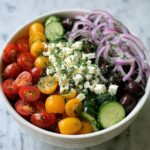
Classic Greek Salad Recipe
- Prep Time: 10 minutes
- Cook Time: 0 minutes
- Total Time: 10 minutes
- Yield: 4 servings
- Category: Salad
- Method: No-Cook
- Cuisine: Greek
- Diet: Gluten Free
Description
This Classic Greek Salad is a refreshing and vibrant dish featuring crisp cucumbers, juicy cherry tomatoes, tangy Kalamata and green olives, and creamy feta cheese. Tossed with a simple dressing of olive oil, red wine vinegar, and a sprinkle of oregano and fresh parsley, it’s the perfect light side dish or a wholesome main course that’s ready in just 10 minutes.
Ingredients
Vegetables
- 2 cups cucumber, sliced
- 1 cup cherry tomatoes, halved
- 1/2 red onion, thinly sliced
Olives and Cheese
- 1/4 cup Kalamata olives
- 1/4 cup green olives
- 1/2 cup feta cheese, cubed
Herbs and Seasoning
- 1 tbsp fresh parsley, chopped
- 1/4 tsp dried oregano
- Salt and pepper, to taste
Dressing
- 2 tbsp olive oil
- 1 tbsp red wine vinegar
Instructions
- Prepare Vegetables: Slice the cucumbers and red onion thinly, halve the cherry tomatoes, and cube the feta cheese into bite-sized pieces for a perfect texture and ease of eating.
- Combine Ingredients: In a large mixing bowl, add the sliced cucumbers, halved cherry tomatoes, thinly sliced red onion, Kalamata olives, green olives, and cubed feta cheese to create the salad base.
- Season and Dress: Sprinkle the salad mixture with dried oregano, fresh chopped parsley, salt, and pepper according to taste. Drizzle the olive oil and red wine vinegar evenly over the ingredients.
- Toss Gently: Use salad tongs or two large spoons to gently toss all ingredients together, ensuring the dressing coats everything evenly without breaking up the feta cheese.
- Serve: Serve the Greek salad immediately as a refreshing side dish or a light main course. Optionally, pair it with warm pita bread for a more filling meal.
Notes
- For best flavor, use fresh, high-quality extra virgin olive oil and authentic Greek Kalamata olives.
- The salad is best eaten fresh but can be refrigerated for up to one day; dress just before serving to keep ingredients crisp.
- You can add a squeeze of fresh lemon juice for extra brightness if desired.
- To make it vegan, simply omit the feta cheese or substitute with a plant-based cheese alternative.